

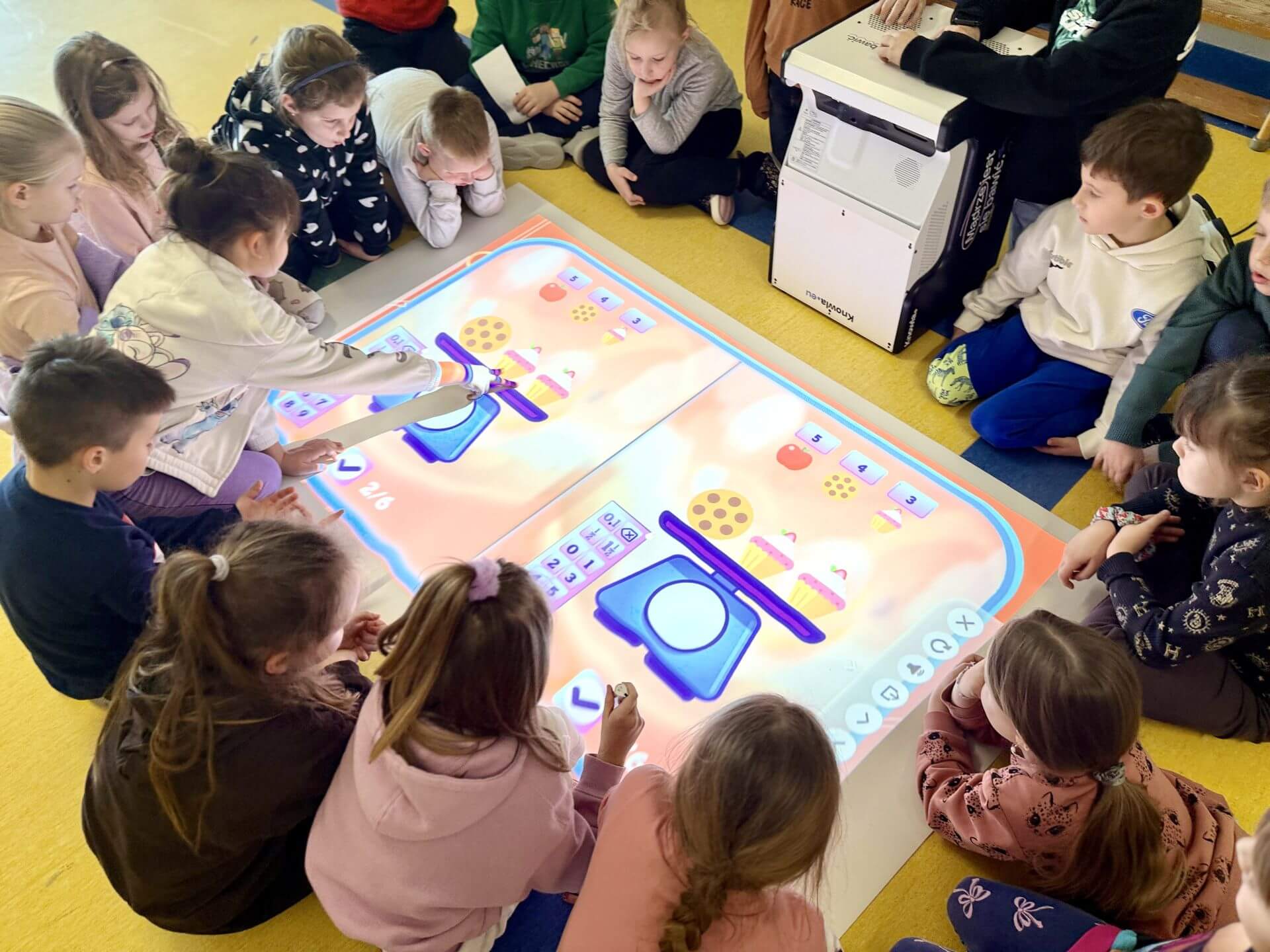


Imagine:
- A classroom that turns into the surface of Mars in a split second;
- application that makes students eager to learn math;
- Interactive tasks that get children to work together to solve problems and learning challenges.
The STEM approach is not just theory. It’s a practical and interdisciplinary approach to knowledge acquisition. It is the moment when the student stops asking: “why do I need this?” and starts shouting: “I want more!”.
Using Knowl’s solutions, all this is possible. With ready-made materials, it’s simple for teachers to introduce in their classes. And thanks to the gamification formula, learning becomes attractive for young explorers.
STEM – what is it?
STEM is much more than an acronym for Science, Technology, Engineering, and Mathematics (STEM). This approach blurs the rigid boundaries between objects to show children how fascinating and coherent (though complex) the world around them is.
Instead of teaching theory in isolation, the STEM model emphasizes practical problem solving, critical thinking and learning from one’s own tangible experiences. Additionally, it encourages students to be creative, collaborative or build innovative solutions.
Due to the ever-evolving world, more letters are being added to the STEM abbreviation to denote different subject and competency areas, e.g.: A – arts or agriculture, R – robotics or reading/writing, E – ecology or economics. The basis of STEM, however, remains constant.
More about what STEM and STEAM are: How did STEM turn into STEAM?
In the era of 21st century competencies, the STEM approach is no longer just a trend, but is becoming a necessity. The solutions(Knowla Box, Knowla Wall and Knowla Web) and the entire Educational Universe respond to this need and fit into the STEM trend.
S for Science: a laboratory under your feet
In STEM and Knowla, science is not confined to thick textbooks, but is an interactive experiential environment. And thanks to the Education Universe’s various applications, abstract science concepts become tangible.
- Nature knowledge given in the form of fun: Visualization of Cosmos, animals, plants, seasons, weather conditions is given in a safe digital environment.
- Physics of motion: Experiencing in practice the force of impact, ball trajectory and reaction speed.
- Research method in practice: The apps stimulate natural curiosity, encouraging questions and independent conclusions, which is the foundation of scientific thinking. Children don’t just read about science, they participate in discovering it, exploring relationships in a digital laboratory.
An example from the lesson
- Learning through discovery: Instead of looking at the figures in the textbook, children launch Planet Smart. Students view the planets of the solar system from each side. They compare them with each other. They see their positioning relative to the Sun and how they move. They can look inside the planets to check their structure.
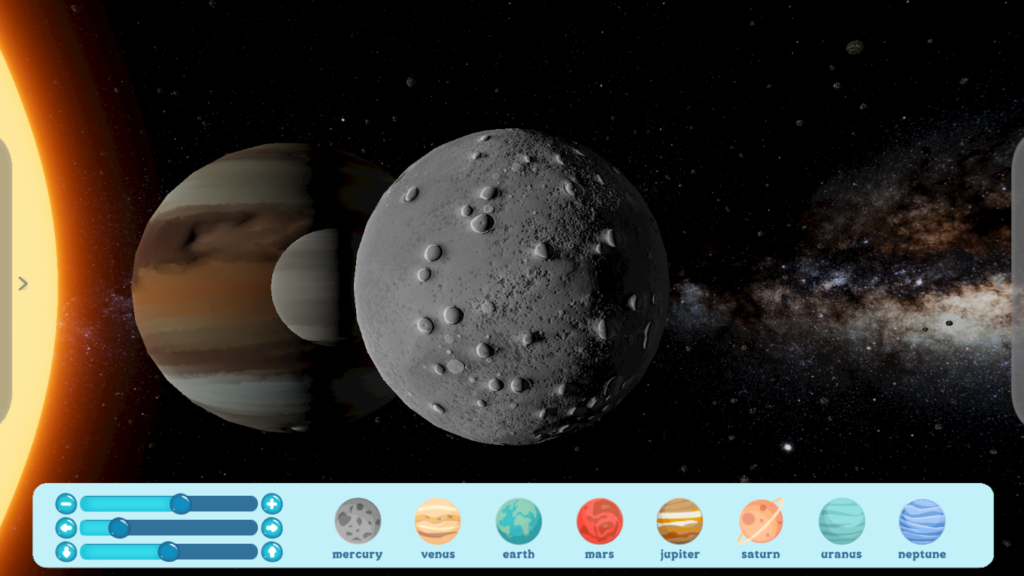
- STEM environment to develop other competencies: At Planet Hopsa, children can develop a variety of skills in 4 environments: space, lab, forest and pixel environments, which stimulates their passion to explore further.
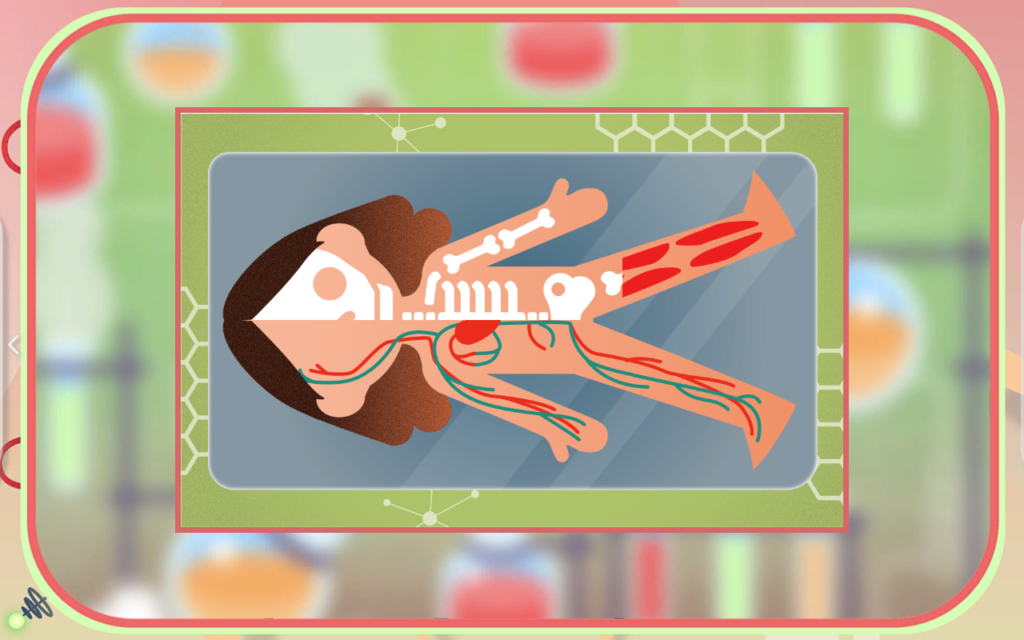
T as Technology: tools that become extensions of the imagination
Knowla is primarily technological solutions: educational applications or innovative multimedia devices.
- Innovative Knowla Technology: Knowla Box and Knowla Wall solutions are a showcase of modern engineering – they use ultrasonic technology to precisely capture ball impacts and advanced Epson laser projectors. With Knowla Web, Knowla applications are available on any device – from an interactive monitor to a tablet.
- Hybrid learning model: Knowla’s solutions combine the physical world (balls, movement) with a digital interface in a seamless and intuitive way, creating an AR environment. Showing children that screens can be used for creation and learning, not just passive consumption of content. Instead of isolation – support cooperation and relationship building. Instead of promoting a sedentary lifestyle – they get people moving.
- Skills needed while using technology: Educational Universe applications teach children 21st century competencies such as problem solving, critical thinking, digital hygiene, computer thinking, and programming.
An example from the lesson
- Knowla technology in the classroom: Sometimes it doesn’t take much to show the essence of a healthy approach to technology. Just use Knowla Box or Knowla Wall solutions to present a YouTube video or search for information on the Internet together. You can also launch any Education Universe app to take advantage of smart entertainment.
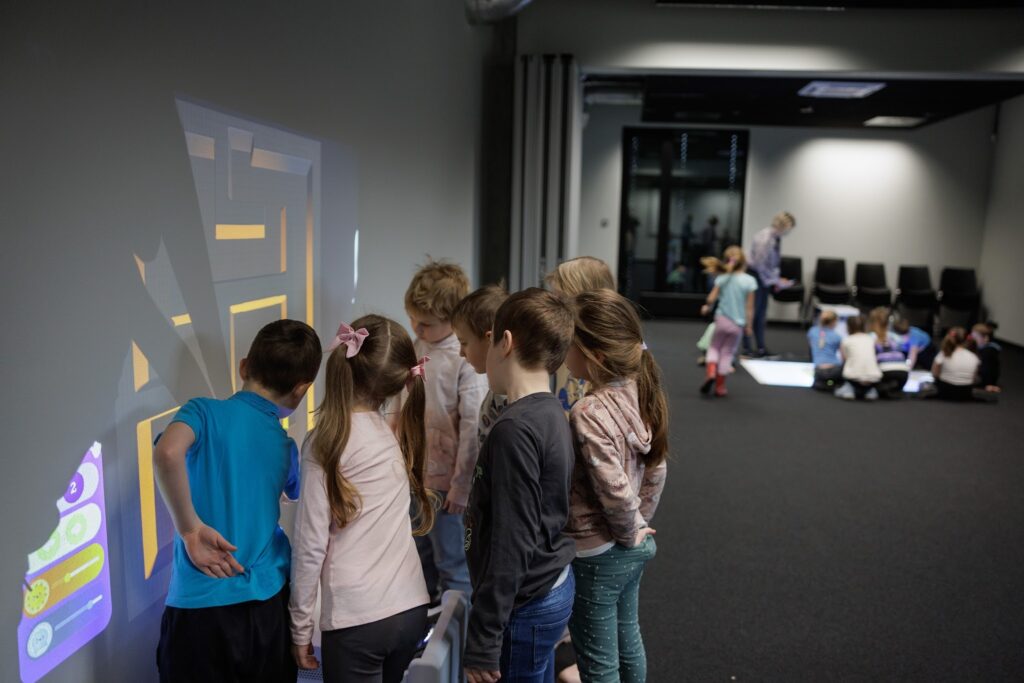
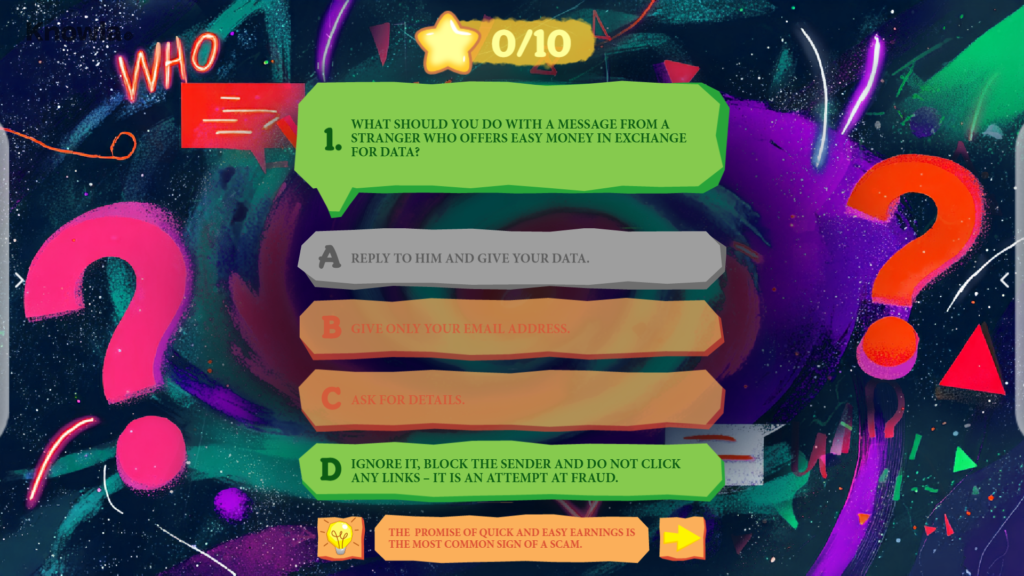
- Digital Hygiene: Planet Zzz features topics on healthy and safe use of technology that encourage you to think about and incorporate into your own daily practice.
E as Engineering: Building the foundations of tomorrow
Engineering is the art of problem solving. Our applications shape the minds of future engineers.
- Solution Design: Activities require students to find the optimal path to a goal with limited resources.
- Different solutions, same result: It is the method of arriving at a solution, not the correct answer itself, that is the goal of STEM methodology. Apps provide feedback and congratulate the winner, but the very method the student used can be anything.
- Debugging reality: Through interactive activities and immediate feedback, children learn that a mistake is just another step in the creation process. This shapes mental toughness and an analytical approach to problem solving.
An example from the lesson
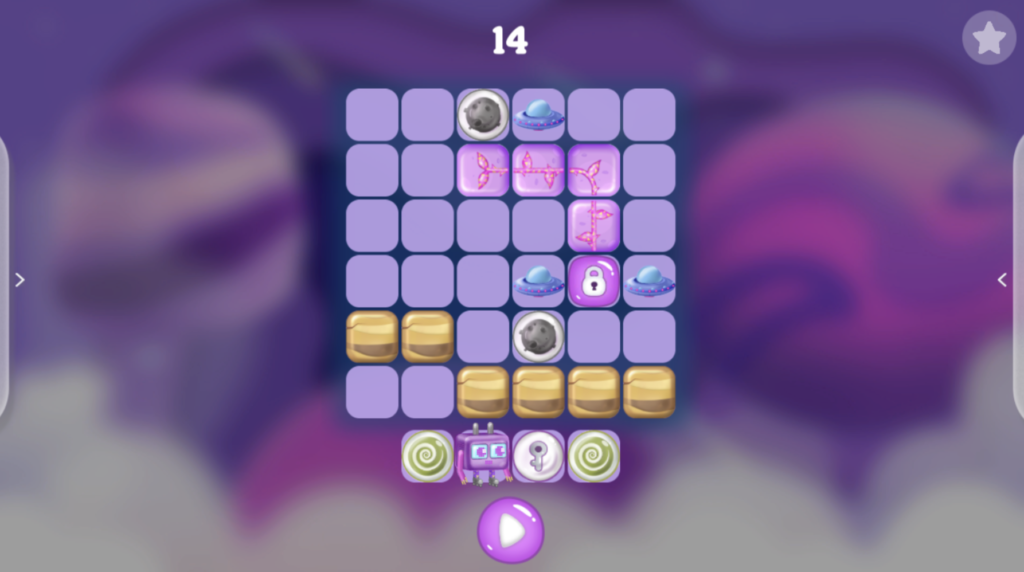
- Algorithmic Thinking: Planet Pi introduces children to the world of sequences, algorithms and instructions. With the help of friendly applications, children develop computer thinking, which is the foundation of programming.
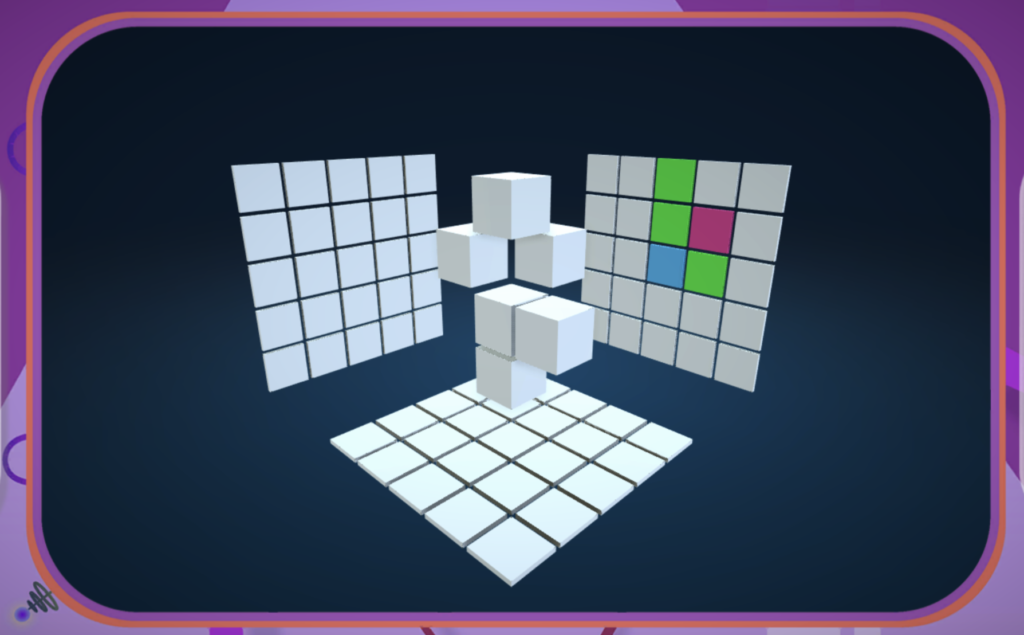
- 3D Design: In Planet Smart, students face the design and construction of 2D and 3D structures, which develops spatial imagination, technical planning or technical projection skills.
M for Mathematics: Logic hidden in play
Math at Planet Knowl ceases to be a “fear queen” and becomes a fascinating pastime that students want to return to.
- Mathematics in Motion: Turn boring posts into dynamic challenges where the outcome of calculations depends on an accurate ball toss or a quick motor reaction.
- The attraction of counting: Gamification makes children perform dozens of activities in a short time without feeling tired. Two-player competition motivates them. And cooperation makes math an experience that builds a sense of belonging.
- Mathematics as a universal language: Showing the presence of numbers in a variety of Education Universe application contexts from actual math equations, to increasing the number of points in a game, to showing geometric shapes, to coloring with counting.
An example from the lesson
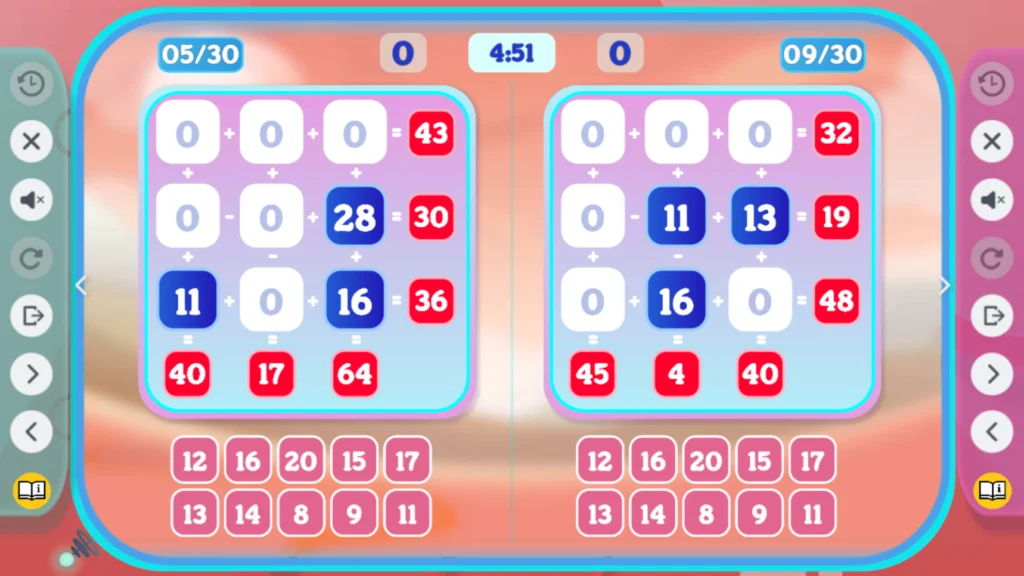
- Math Planet Sigma: Through Play teaches math and makes it an engaging adventure, not a chore. It supports students’ learning from basic arithmetic operations, fractions and percentages to geometry and logical weights.
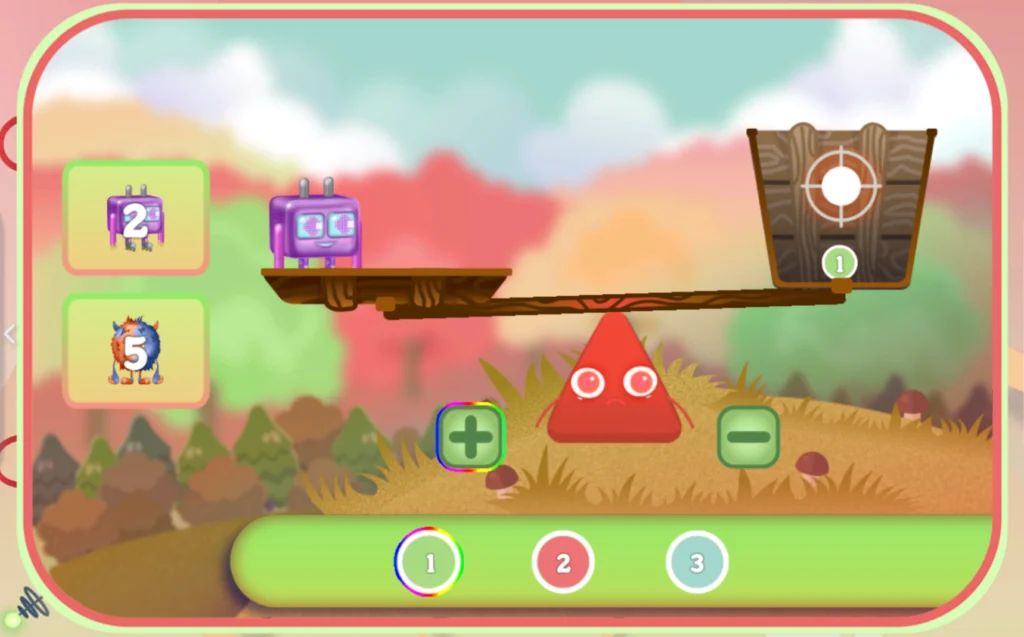
- Preschoolers can count, too, with Planet Hopsa: Activities support learning to count, classify and rank in a creative format that allows preschoolers to master math competency in the most natural way for them – through play.
Summary
When you choose Knowl’s solutions, you get ready-to-use tools to conduct classes in the spirit of STEM. These are not only multimedia devices (technology), but also educational applications that introduce children to the world of science, engineering and mathematics. Through play, they connect subjects in an interdisciplinary way, supporting the development of various competencies at the same time. Fosters creativity, innovation. Enriches problem-solving skills through hands-on experiences. Prepares students for life in a world we don’t yet know.
Is your school ready for STEM activities with Knowla?
Check out Education Universe and Knowl’s solutions.
Make an appointment for a free consultation, where we’ll tell you about Knowl’s options for STEM classes.

