



School: Schule Elfenwiese
Sector: Special Education (Physical and Motor Development)
Location: Hamburg, Germany
Authors: Fabio Priano – teacher and responsible for IT; Kathi Brikwald – occupational therapist
Executive Summary
Schule Elfenwiese, a specialized institution for students with physical and motor impairments, sought to overcome the limitations of traditional digital teaching tools. Despite previous investments in adaptive technology, true barrier-free accessibility remained a challenge. By implementing the Knowla Box, the school successfully established an inclusive digital environment that accommodates wheelchair users, boosts student motivation, and seamlessly integrates into therapeutic routines.
Schule Elfenwiese – School with mission
Schule Elfenwiese is a state-run, full-day school serving approximately 220 students with special educational needs. The institution specializes in supporting children and young people with physical or motor impairments, many of whom have additional needs regarding perception, learning, language, behavior, or cognitive development. The school combines individualized instruction with a comprehensive in-house therapeutic program, including physiotherapy and occupational therapy integrated into daily routines.
The Challenge: The Limits of Vertical Interaction
The educational strategy at Schule Elfenwiese is grounded in the principles of Universal Design for Learning (UDL), aimed at creating barrier-free environments. To support this, the school previously equipped classrooms with height-adjustable interactive whiteboards capable of being lowered to 10 cm above the floor.
However, a critical gap remained:
Accessibility Limitations: Despite the adjustability of wall-mounted boards, young students using wheelchairs still faced difficulties effectively reaching and interacting with these digital surfaces.
Incomplete Inclusion: Universal accessibility was not fully achieved, limiting the ability to create truly shared, cooperative learning moments for all students regardless of motor limitations.
The Solution: Knowla Box – Flexible Floor Projection
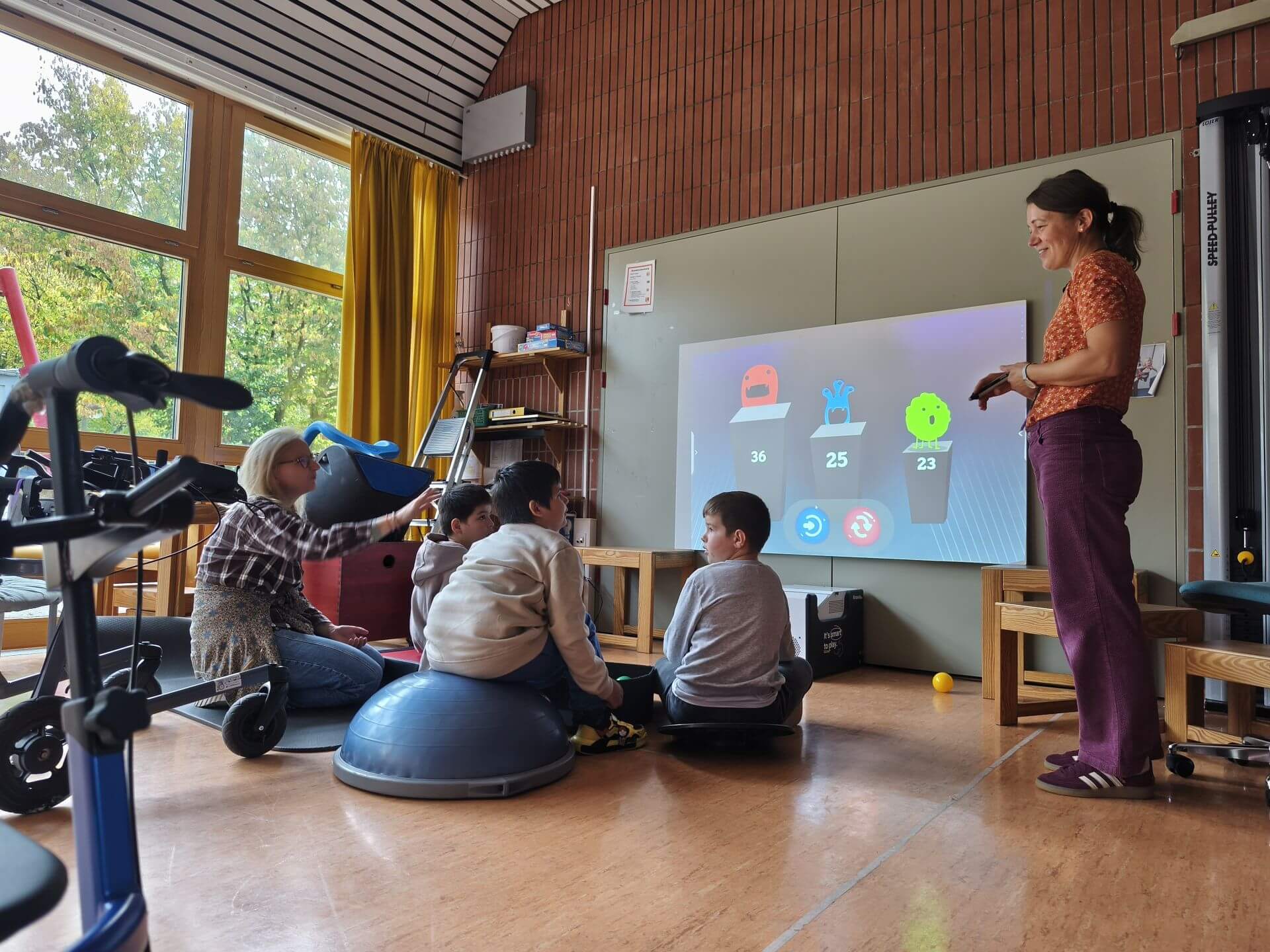
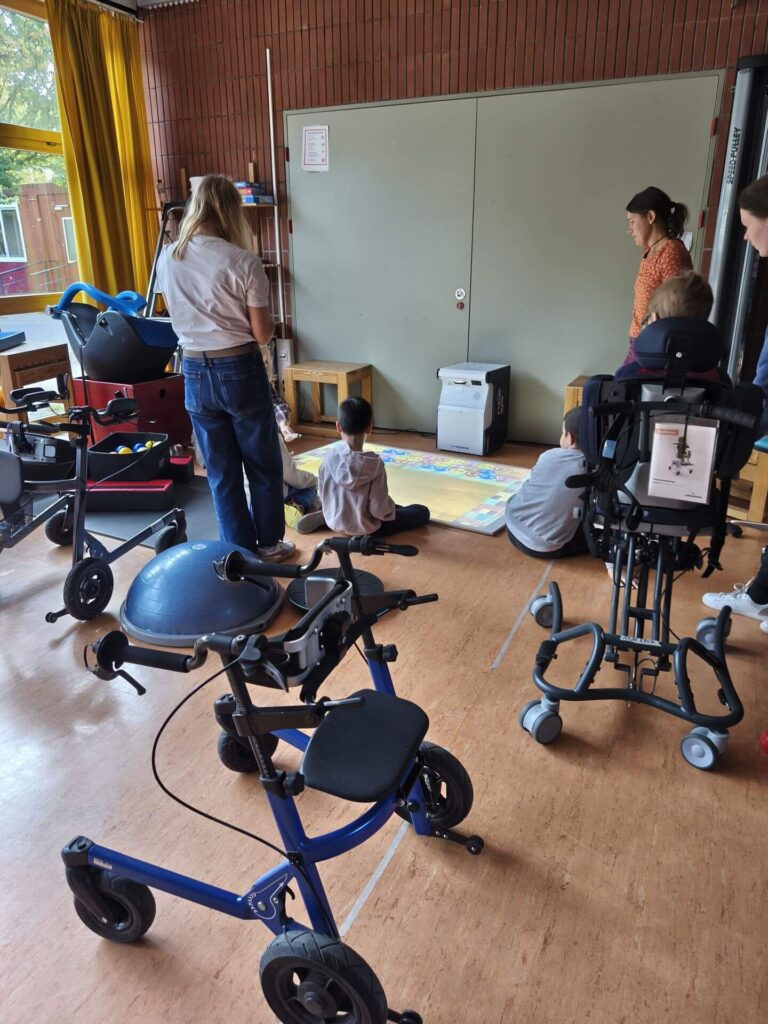
The school introduced the Knowla Box, a device capable of projecting digital interfaces directly onto the floor or wall. Unlike fixed wall installations, this solution offered portability and a new spatial dimension to digital learning.
Key features utilized include:
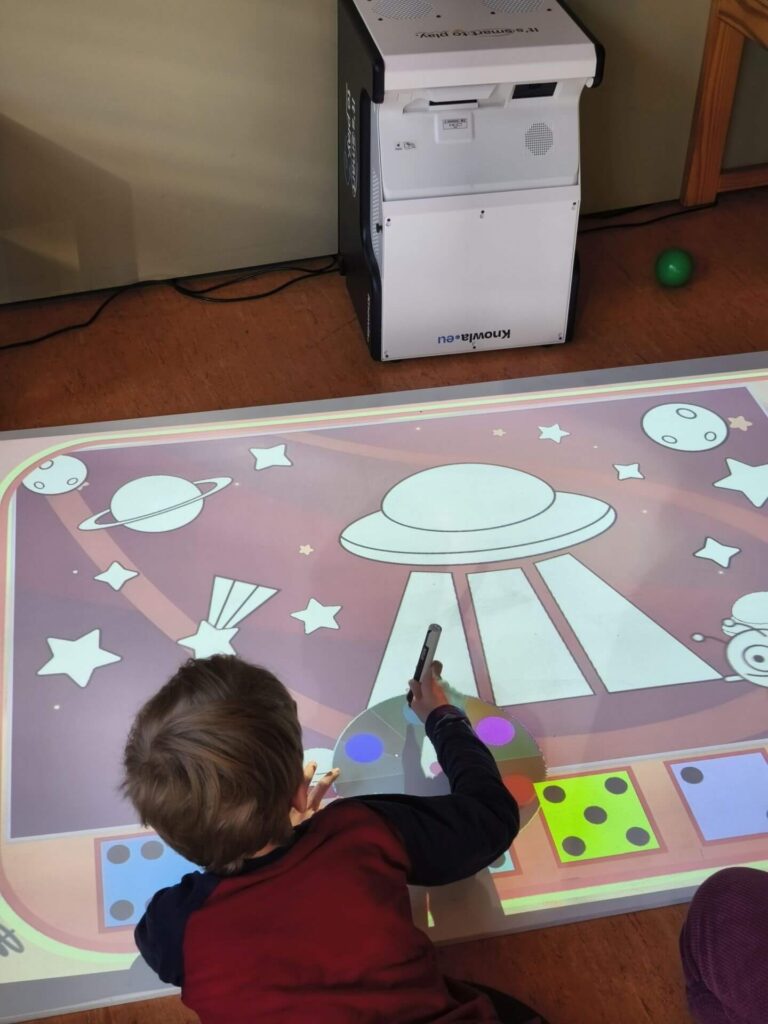
Floor Projection: Creating a large, universally accessible interaction surface projecting directly on a floor.
Dual-Surface Capability: In addition to the floor, the Knowla Box creates a large interactive display on walls, allowing for a seamless transition between horizontal and vertical modes of play and learning.
Premium Projection & Eye Safety: Equipped with a high-brightness Epson laser projector, Knowla ensures superior color quality and clarity. The image relies on reflected light—eliminating harmful direct blue light exposure.
Multimodal Interaction: Utilizing ball interaction for dynamic movement and pen-based applications for fine motor skills.
The Knowla Mat: The Knowla Mat is deemed an indispensable addition, as it ensures a clear and distinct projected image that is essential for creating engaging activities.
Inclusive Software Suite: Includes specialized software designed for education and rehabilitation. The applications provide accessible interaction that supports Special Educational Needs (SEN) therapy, ensuring everyone can participate and learn.
Key Results and Impact
True Barrier-Free Inclusion
The introduction of floor projection fundamentally resolved long-standing accessibility issues. Students in wheelchairs can now interact directly from their chairs or on the floor alongside peers, enabling inclusive, cooperative learning independent of motor abilities.
Increased Motivation and Therapeutic Success
The implementation resulted in a significant increase in learning motivation and active learning time. Therapists reported that children who were previously difficult to motivate now attend sessions with enthusiasm. The “gamified” nature of the content and the joyful and child-friendly atmosphere created by applications proved to be effective for both individual and small-group settings.
Seamless Integration and Staff Adoption
A major prerequisite for sustainable digital integration is ease of use. The intuitive nature of the Knowla hardware and software led to rapid, high acceptance among staff. The system aligns with the school’s “Learning in Movement” approach, accommodating diverse learning styles without imposing technical barriers on educators.
Future Outlook
Schule Elfenwiese no longer views the Knowla Box merely as a tool but as a vital component of their educational environment.
Next steps include:
Dedicated Learning Space: The school is currently redesigning a room to create a dedicated “Knowla learning environment”.
Concept Integration: Drafting new spatial concepts to integrate the technology more comprehensively into the school’s pedagogical framework.

