


The development of children in the nursery (0-3 years) and preschool (3-6 years) ages is a key stage in the formation of their cognitive, emotional, social and physical abilities. This is a time of rapid growth, intensive learning and the development of basic skills that will have an impact on their future lives.
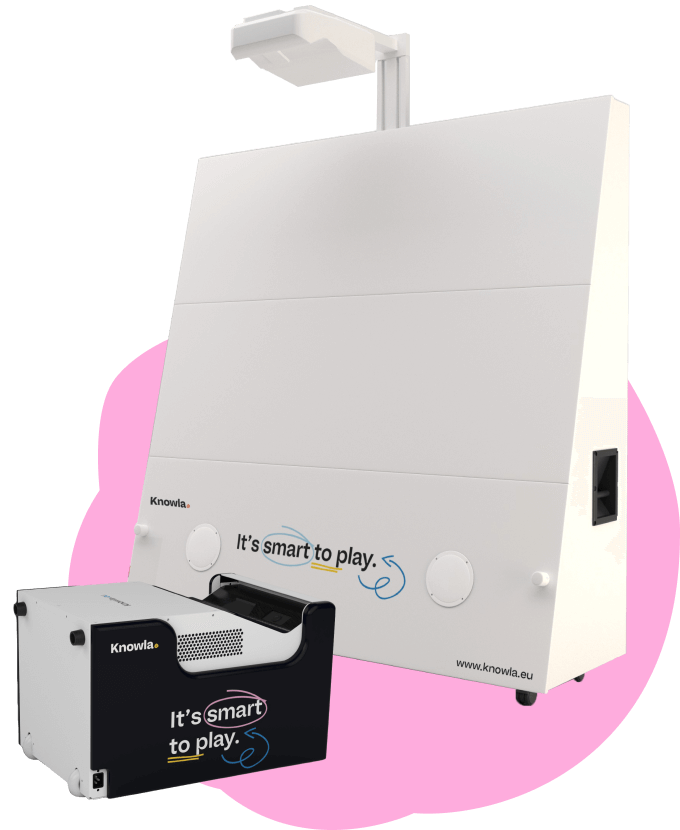
Modern technology represented by the Knowla Box, used wisely and responsibly, can be a valuable tool to support children’s development in these key areas.
Important areas of children’s development
Physical development
During the first years of life, children develop their motor skills – both large motor skills (e.g. walking, running) and small motor skills (e.g. grasping, drawing). Nursery and preschool children learn motor coordination and gain control of their bodies. Developing strength, balance and spatial orientation is also important.
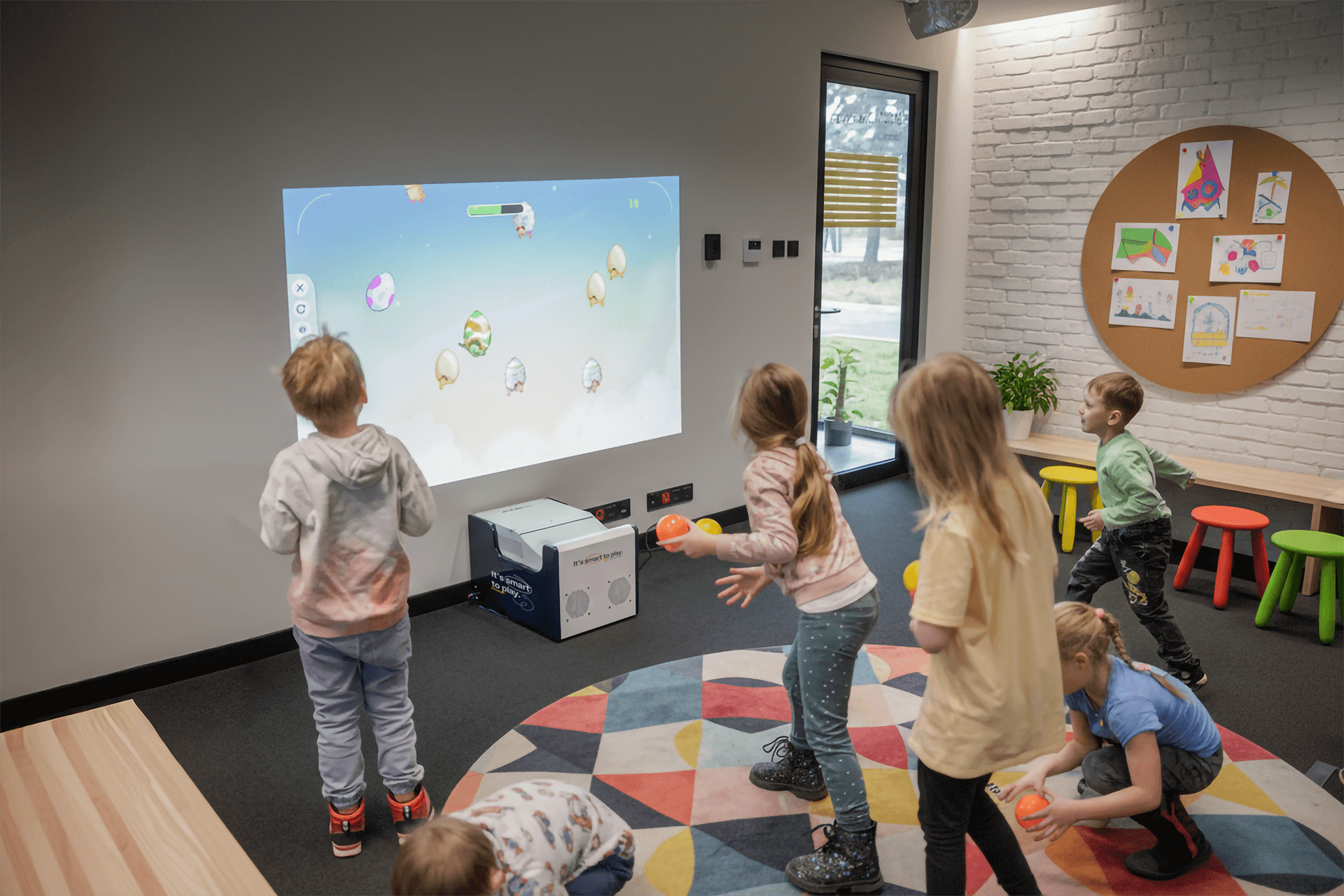
All of these areas are supported through Knowl’s solution, both in the physical area, by inducing interactions with physical objects, such as pens (writing grip exercise, fine motor skills), balls (hand movement exercises, fine and gross motor skills).
Dedicated content to support fine motor skills through learning to write on the trace, interactive coloring pages, encourages motor activity through physical exercises (throwing to a target), but also breathing practices.
Language development
The development of speech and communication skills is another key area. Children at this age learn new words, develop sentences and begin to understand the structures of language. Later in the preschool years, the ability to tell stories, ask questions and hold conversations also comes into play.
Knowla provides content (coloring pages, puzzles, picture ciphers, character/object search engines) tailored to the child’s developmental level. Knowla allows children to do multiple repetitions, which is especially important for children with delayed speech development or bilinguals. For non-speaking children, Knowla supports communication with pictures (AAC), sound – which increases the sense of agency and encourages interaction.
Cognitive development
Cognitive development includes abilities such as concentration, memory, problem solving and developing imagination. Children learn to recognize shapes, colors, numbers and letters. Exploration of the world, experimentation and learning through play are important elements of their development in this area.
Knowla supports children’s cognitive development through interactive tasks that engage attention, memory and logical thinking – such as recognizing shapes, colors, objects, numbers or letters. Through games based on exploration, experimentation and imagination, the app develops concentration and creative problem-solving skills.
Social-emotional development
During this period, children learn to recognize and express emotions, develop empathy and learn to build relationships with others. Social development also includes learning the principles of cooperation, sharing and dealing with conflict situations.
Knowla supports children’s social-emotional development through tasks that help identify and name emotions, and exercises that develop empathy and relationships with others. The apps also teach the principles of cooperation, sharing and collaborative problem solving in a safe, interactive environment.
How can technology support children’s development?
Promote physical development
Knowla applications encourage children to move, to be physically active.
Examples include games that reward you for performing movements or tasks that require coordination and balance. Knowla also supports the development of small motor skills through applications that require precise writing or drawing.
Developing language skills
Knowla’s language learning apps – the Ling Package – support language development. Children can learn new words, develop imagination and phonemic hearing by listening to commands, feedback or interacting with characters in the apps.
Aid in cognitive development
Knowla supports cognitive development through logic apps, apps for learning math basics, programming.
Promote social-emotional development
Knowla supports children in recognizing emotions and social relationships. The applications are based on cooperation, teaching the principles of sharing and working in a group. In addition, Knowla introduces children to the world of emotions, supports them to better understand themselves and others.
The development of children in the nursery and preschool age includes many key areas – from physical to social-emotional abilities.
Responsibly designed and used technology can support these processes, offering children interesting and interactive development opportunities. Adult-child collaboration and a conscious approach to technology will achieve a balance between traditional methods and modern solutions, creating optimal conditions for learning and play.